Platform Paper Cuts
Fixing the small things that compound into big problems
Across a platform serving 500K+ operators, small usability issues compound fast. This workstream identified and addressed the highest-frequency friction points — the repeated annoyances that erode trust, slow workflows, and generate support load. More than fixing bugs, it established a cultural norm: quality is everyone's responsibility, and it can be improved safely and continuously.
Context & Constraints
MyGeotab had grown into a platform of hundreds of features built across teams, over years, with evolving standards. The result was a surface full of small inconsistencies — labels that didn't match, states that weren't communicated, flows that were almost right but had a rough edge. Individually, none of these were critical. Collectively, they created a sense that the platform was hard to trust. This workstream existed to systematically find and fix them.
No single owner, no clear fix process
Paper cuts crossed team boundaries — meaning no one team felt responsible for them, and fixes required coordination across separate backlogs.
Risk aversion slowed improvement
Teams were cautious about changing anything in production without clear ownership and a safe rollout path — even for low-stakes fixes.
Compounding effect at scale
Each issue was small. But an operator encountering ten of them in a session felt the platform was unreliable — a much bigger problem than any single bug.
Full case study detail — including specific issues addressed, the fix framework, and measurable outcomes — coming soon.
More work at Geotab
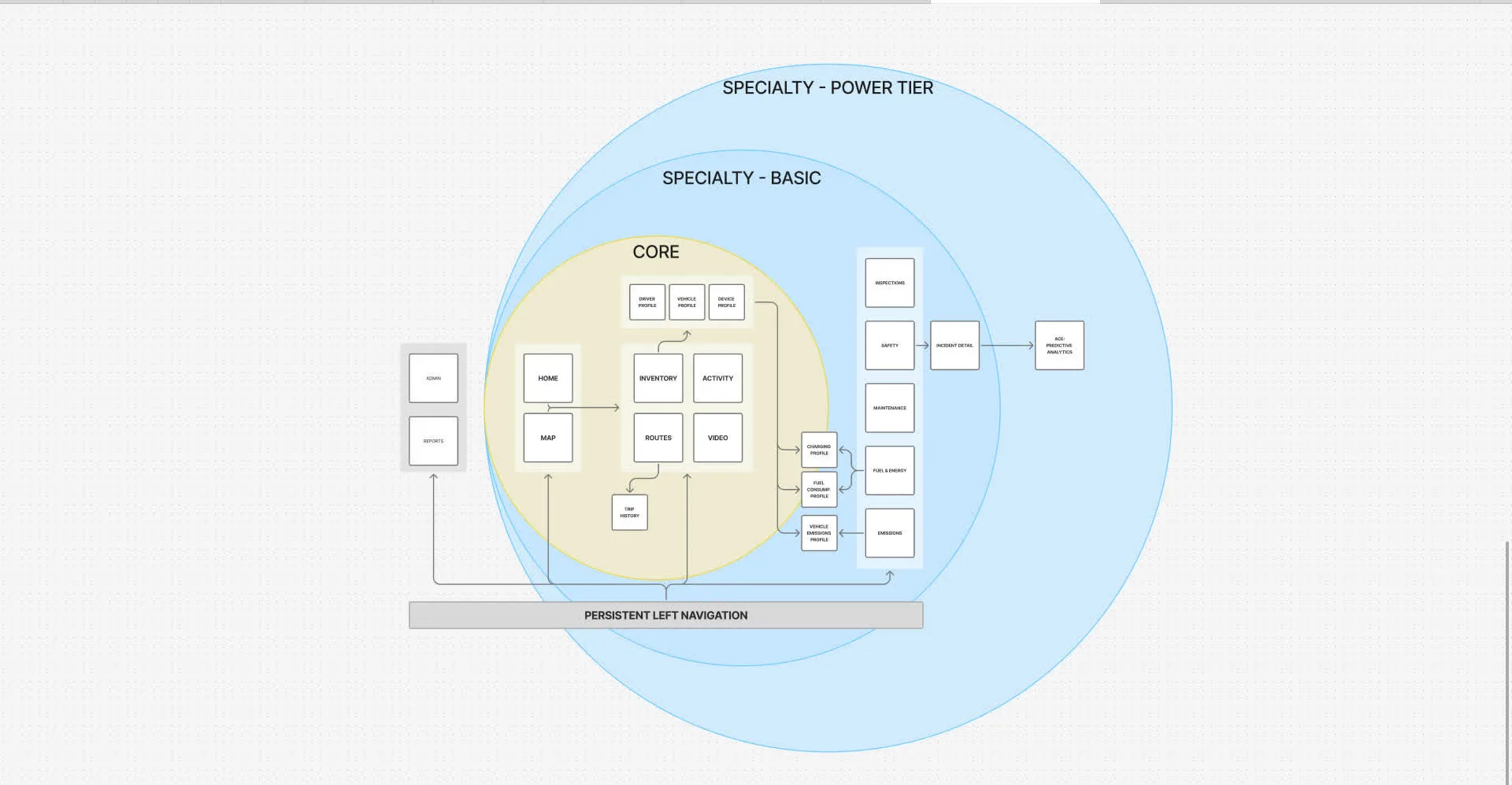
Next Gen MyG
Platform-wide IA redesign — Hub & Spoke navigation that cut new-user churn by 71% across 500K+ operators.
View case study →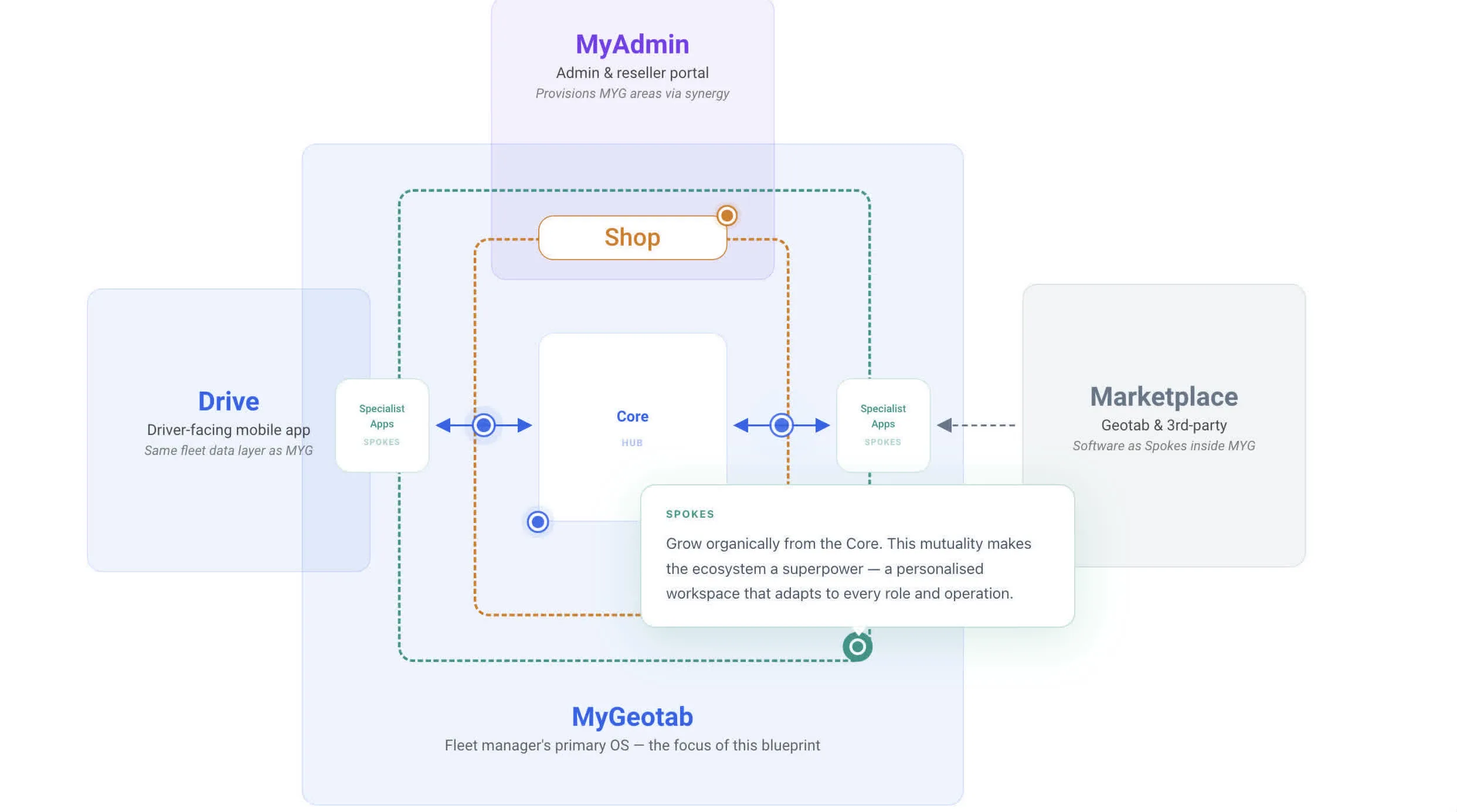
Dashboard & Shared Patterns
Defining shared patterns for high-traffic surfaces — aligning interaction models across teams and reducing rework.
View case study →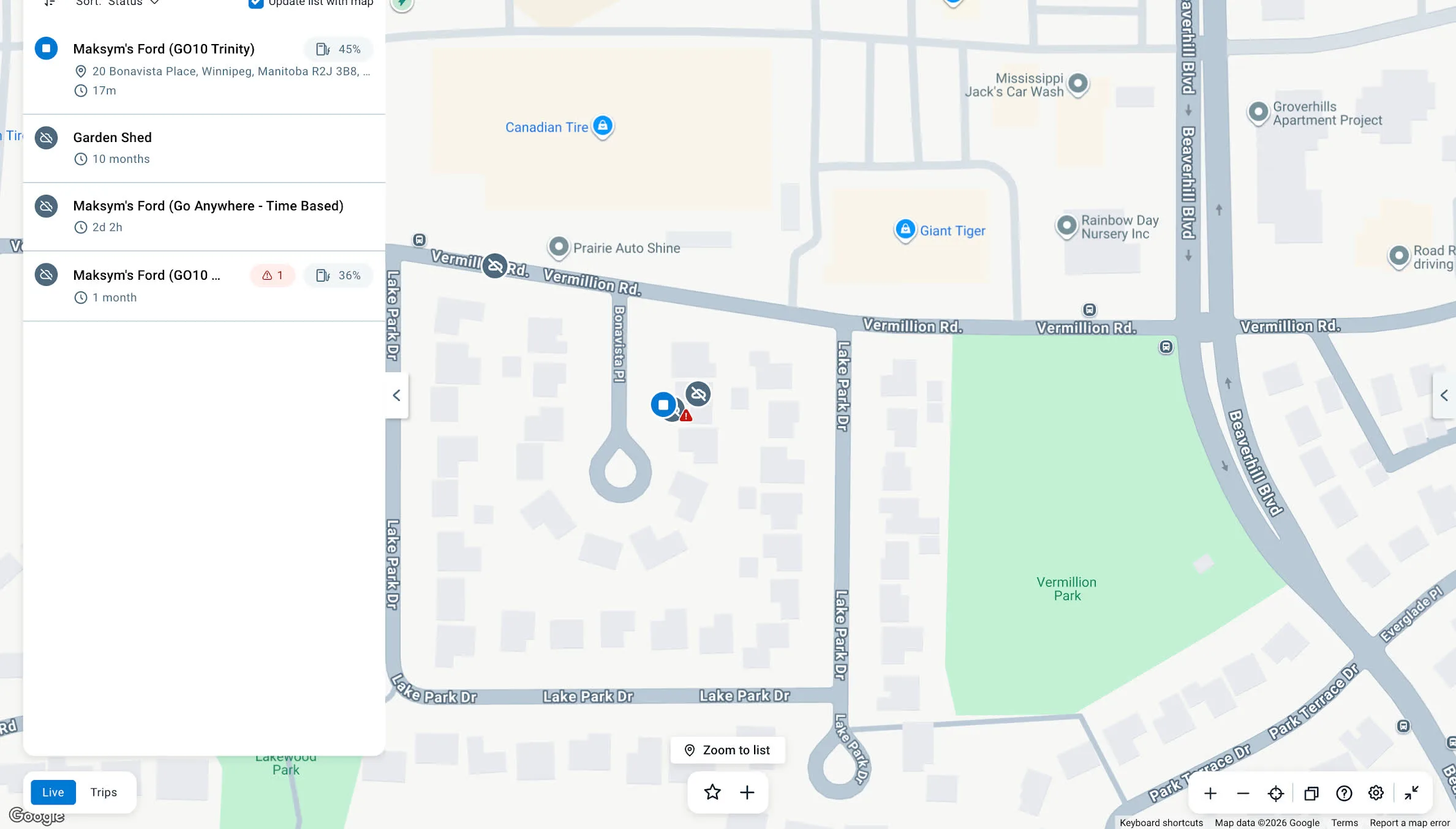
Map / Trips / Zones
Unifying live tracking and historical trips into one coherent surface — redesigning the most-used page in MyGeotab.
View case study →