Schach — Form is Function
A conceptual chess set where every piece's form encodes how it moves — a tactile system designed so the rules can be read from the shapes themselves.
Schach — German for 'chess' — is a self-initiated concept that rethinks the chess set from first principles. Traditional pieces rely on learned, ornamental silhouettes: you have to be taught that the horse moves in an L. Schach asks a different question — what if the form of each piece told you how it moves?
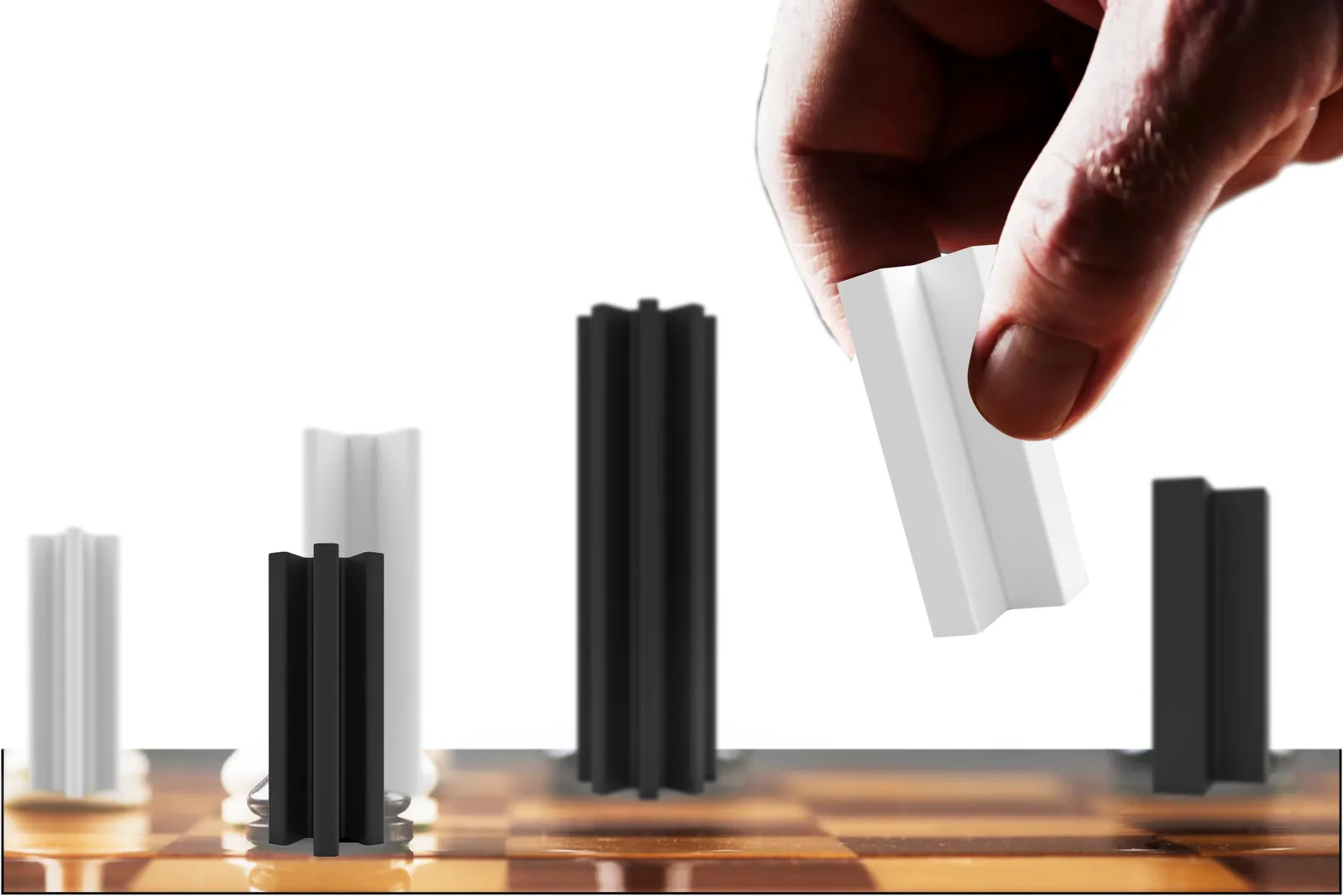
The result is a fully systematised set where shape, scale, height, and edge geometry each carry meaning. A new player can read the board's logic from the pieces alone, and an experienced one gets a sculptural set that turns the rules into objects.
Form is Function
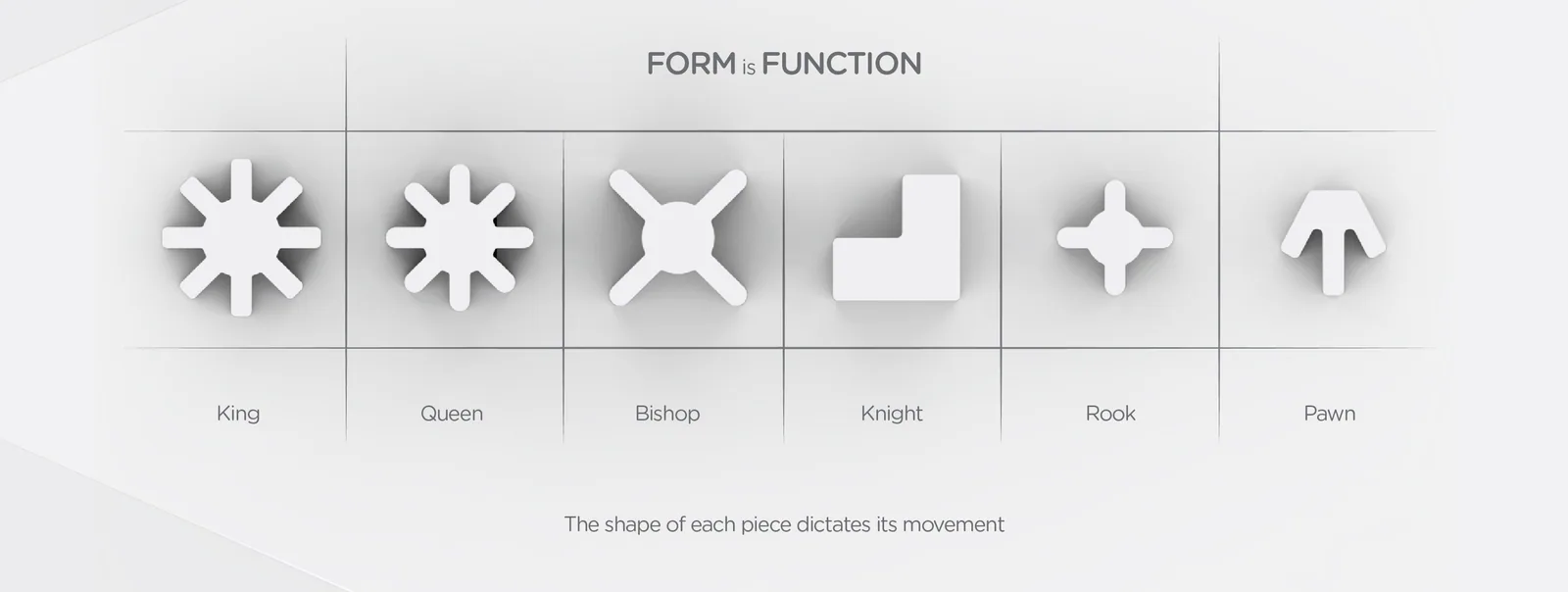
Each piece's profile maps directly to how it moves. The radial, multi-armed forms belong to the pieces that travel in many directions; the single-arm pawn points forward, the only way it can go. The shape of every piece dictates its movement — once you see the system, the board reads itself.
Scale & Height
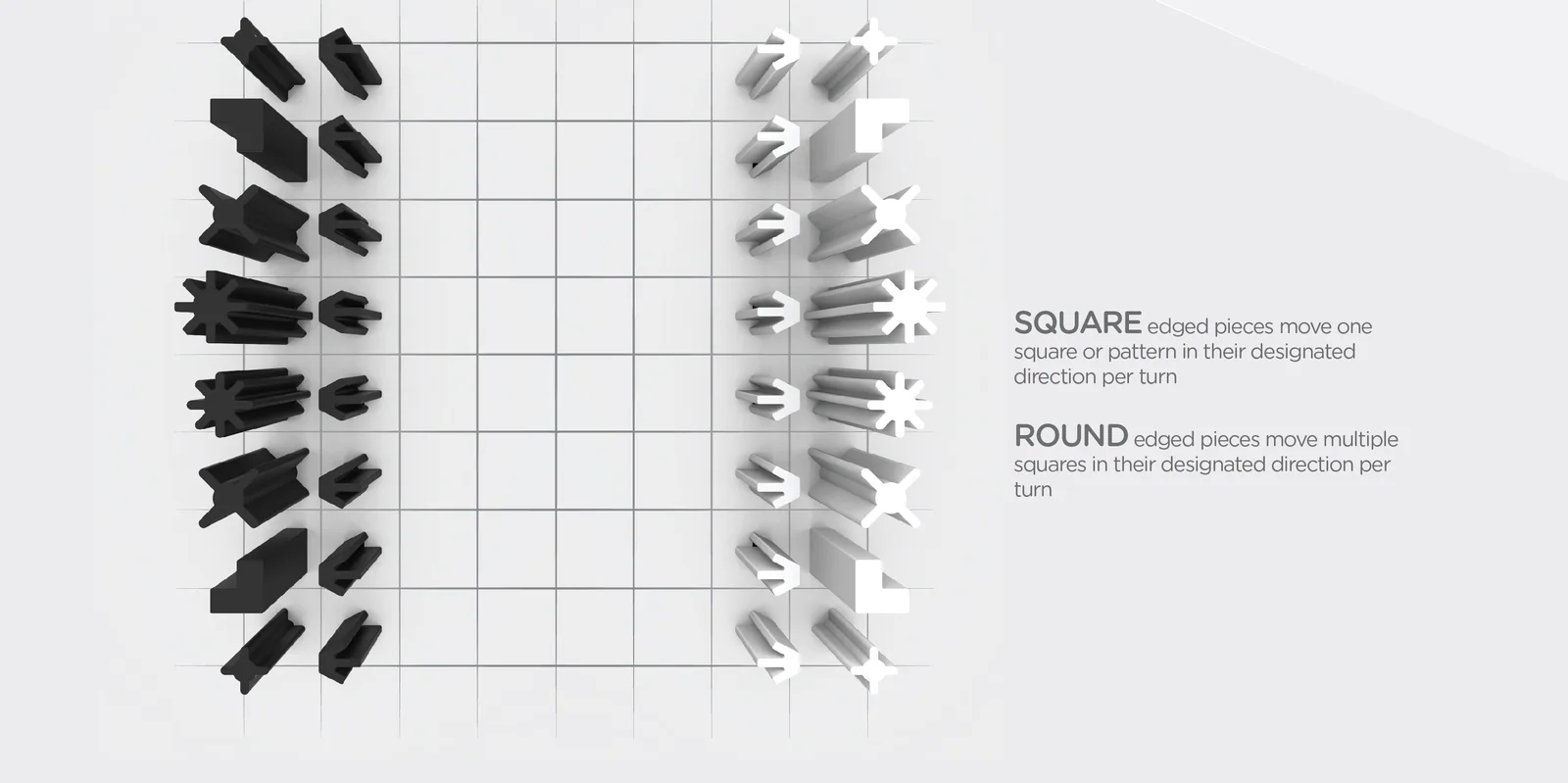
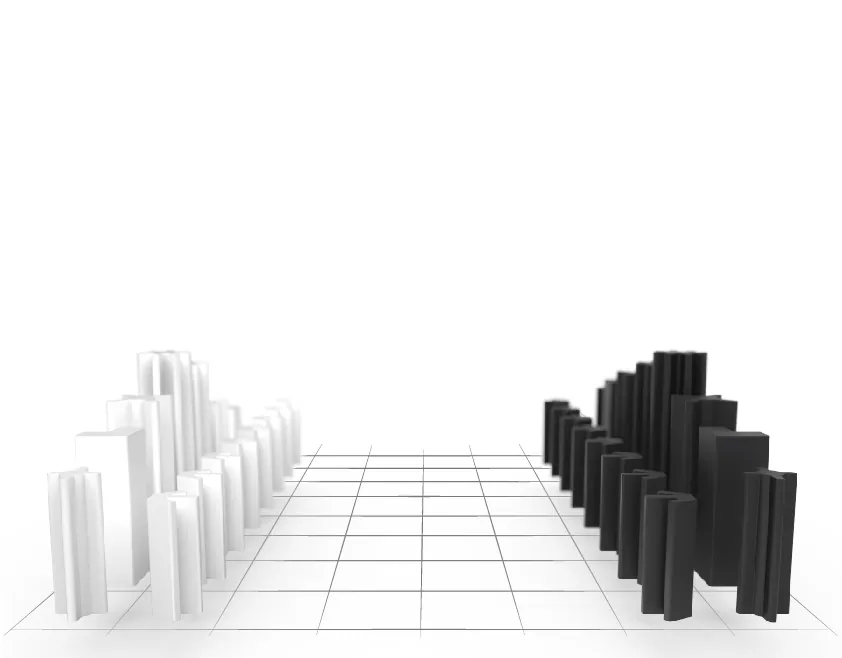
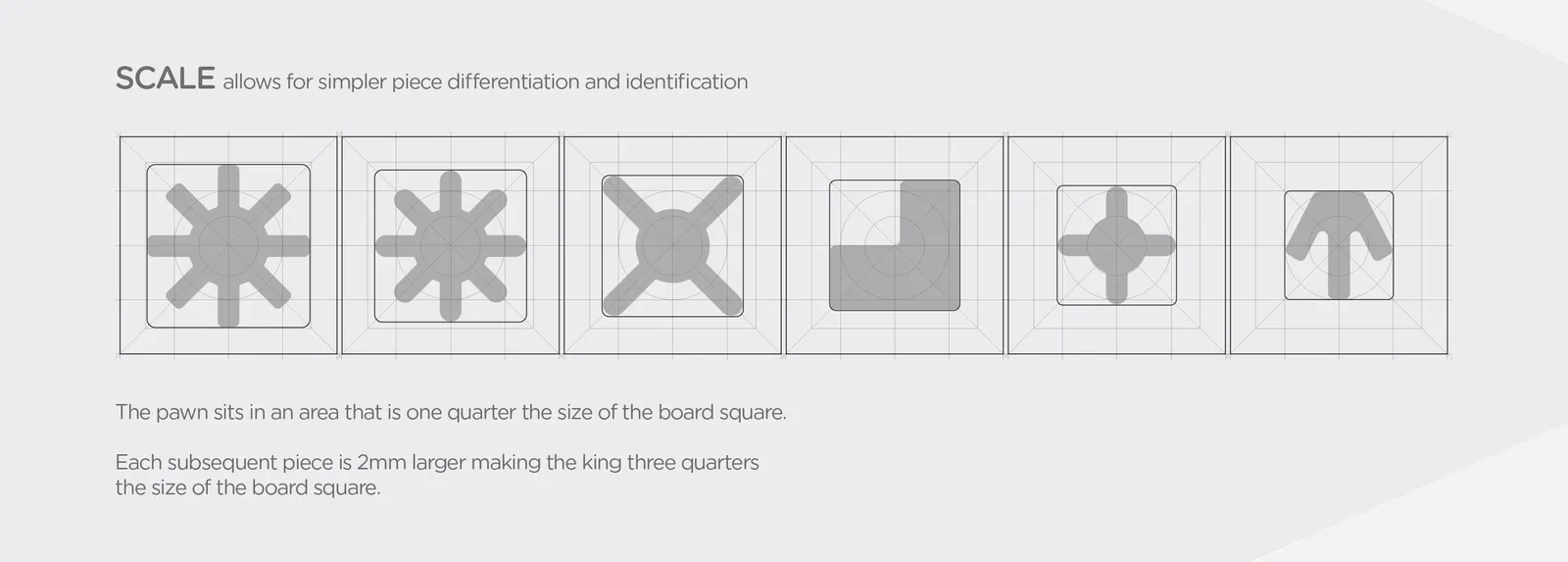
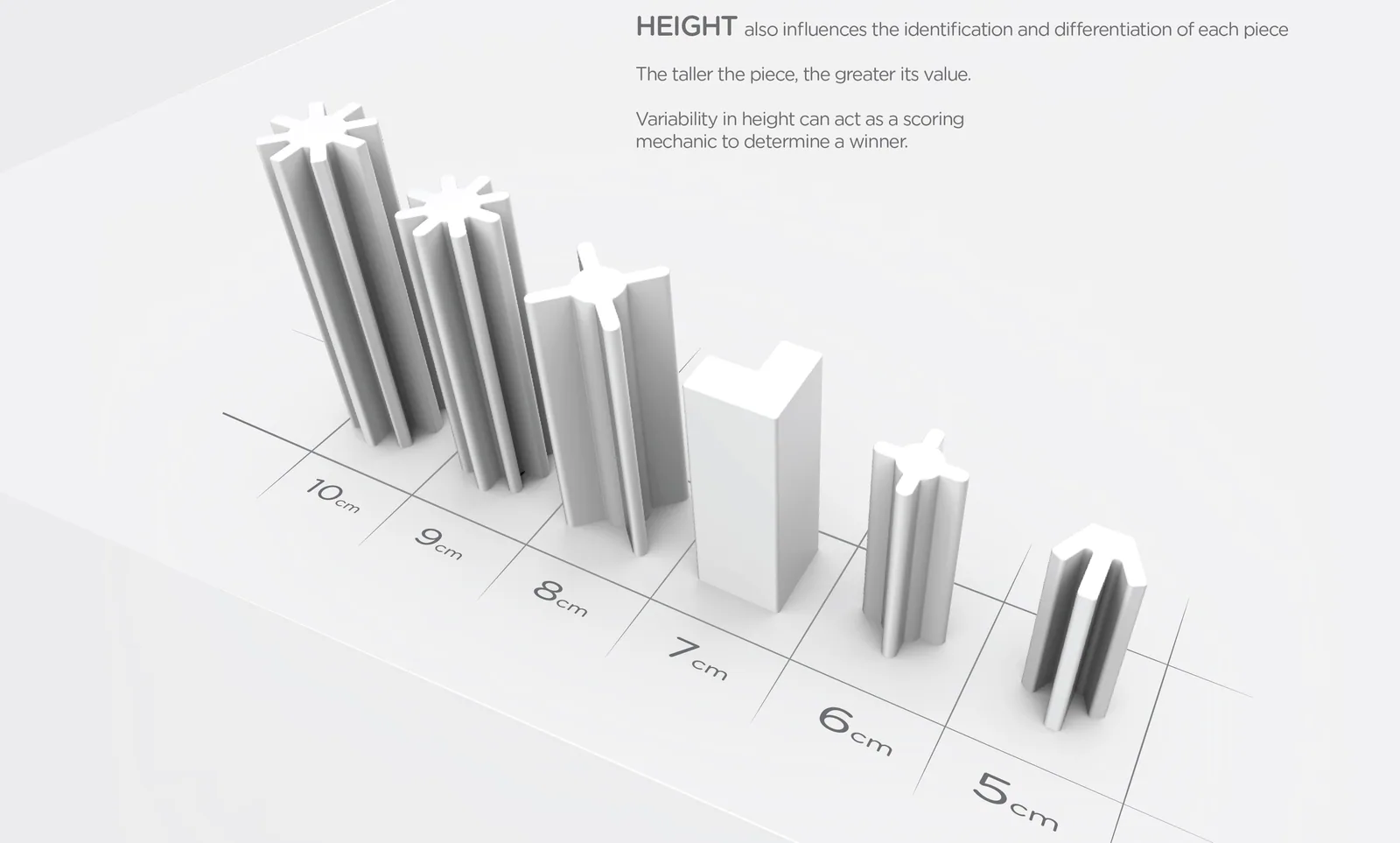
Two further variables encode a piece's value. Scale sets the footprint — the pawn occupies a quarter of its square, the most powerful pieces fill theirs — so relative importance is visible in plan. Height reinforces it in elevation: the taller the piece, the greater its value, giving players a second, glanceable cue to identify the set across the board.
Square & Round — Encoding Movement
The final layer of the system lives in the edges. Square-edged pieces can move one square — orthogonal, single-step movement. Round-edged pieces can travel multiple squares in their defined direction. Edge geometry becomes a quiet grammar: feel the corners of a piece and you know how far it reaches.